I bought this van in November of 2022. I don’t remember exactly why, I think it was one of those things where you think “I like Astro vans”, next thing you know you’re idly browsing marketplace and you happen upon a bitchin’ 90s coversion van with cool stripes, and next next thing you know you’re $1400 poorer and you’ve got 4500lbs of General Motors sheet steel shedding rust in your driveway. These things happen. This is the van, the day after I brought it home:
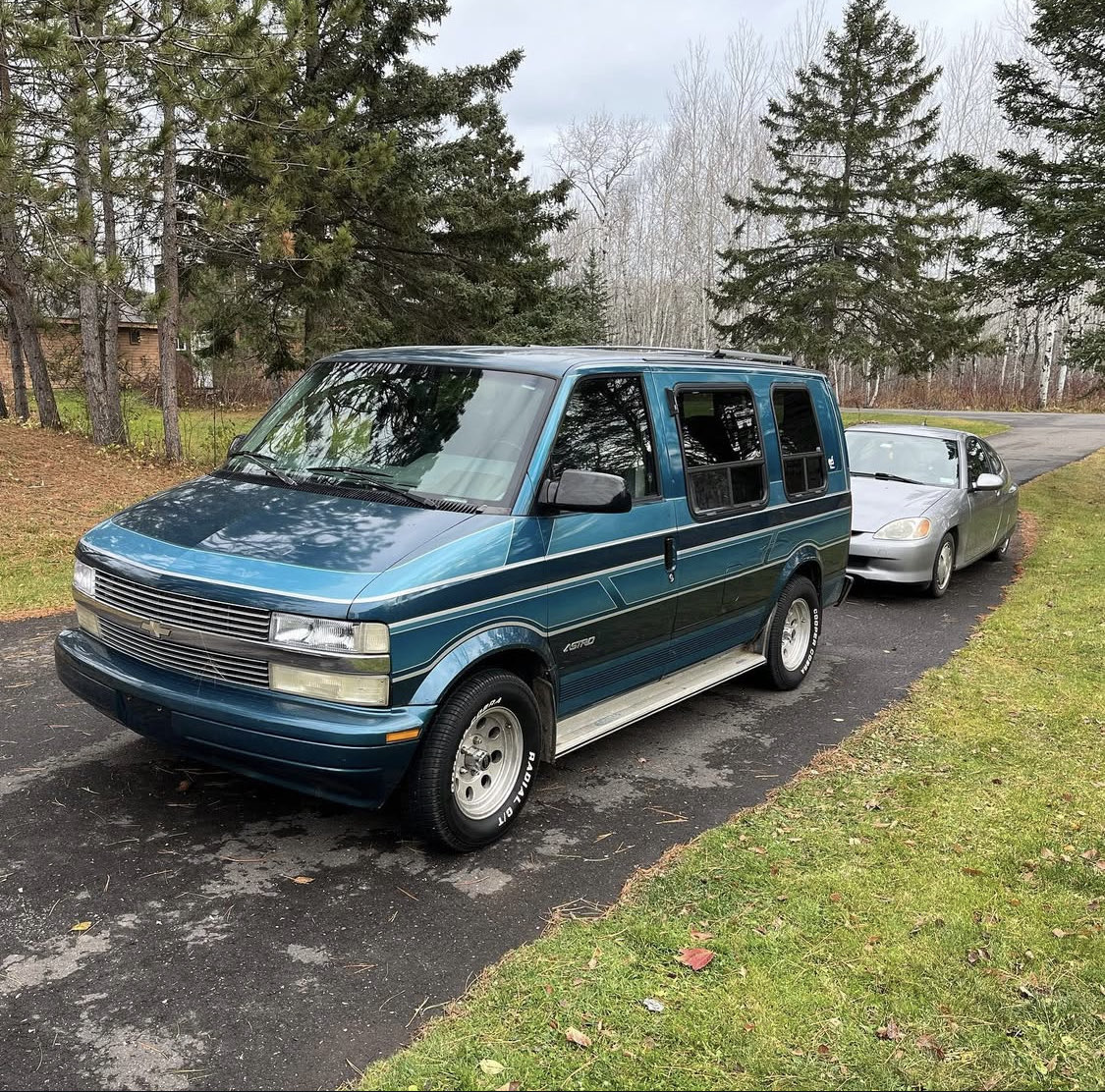
It’s a 1995, 2wd with the 4.3 CPI and 4L60E, 3.42 gears, and a Chariot conversion package. It had a sticker for a dealership in Eau Claire, Wisconsin. It had 151,000 miles upon purchase, and a recently replaced fuel tank and pump, and rebuilt A/C. Those are the positives. The negatives? The brake pedal was a strange combination of very hard, and also didn’t seem to do much, and when it did do something the front wheels locked up and the rears did nothing. Hmm. Beyond that, the passenger window didn’t go down, the exhaust was loud, there was no radio, it shook like hell going down the road, and there was a pretty good chunk of rust coming up from in front of the rear passenger side wheel. All in all, a technically driveable van, for the brave.

The conversion package means that it began life specced as a bare work van, and was sent straight off the factory floor to a company in Elkhart, Indiana, to be reworked to a level of luxury most 90s dads could only dream of. Insulated velour headliner and walls, thick carpet, wood trim on the doors and walls and cupholders, wooded windowsills and curtains for the passengers, velour captain’s chairs for the front and middle row, and a velour rear bench that could fold down into a bed. Mine was missing the rear bench and one of the middle row seats. It had a six speaker sound system, and a second radio with tape deck in front of the driver’s side middle row seat with a pair of 3.5mm jacks for the passengers to plug in headphones and listen to whatever they wanted. On the exterior, you got a stainless mech insert behind the grill, and sweet stripe decals. I absolutely love old conversion vans. My dad had a 98 Ford Econoline conversion when I was a kid, and some of my oldest memories are driving all around Minnesota in the back of that thing. I have a major soft spot for them.
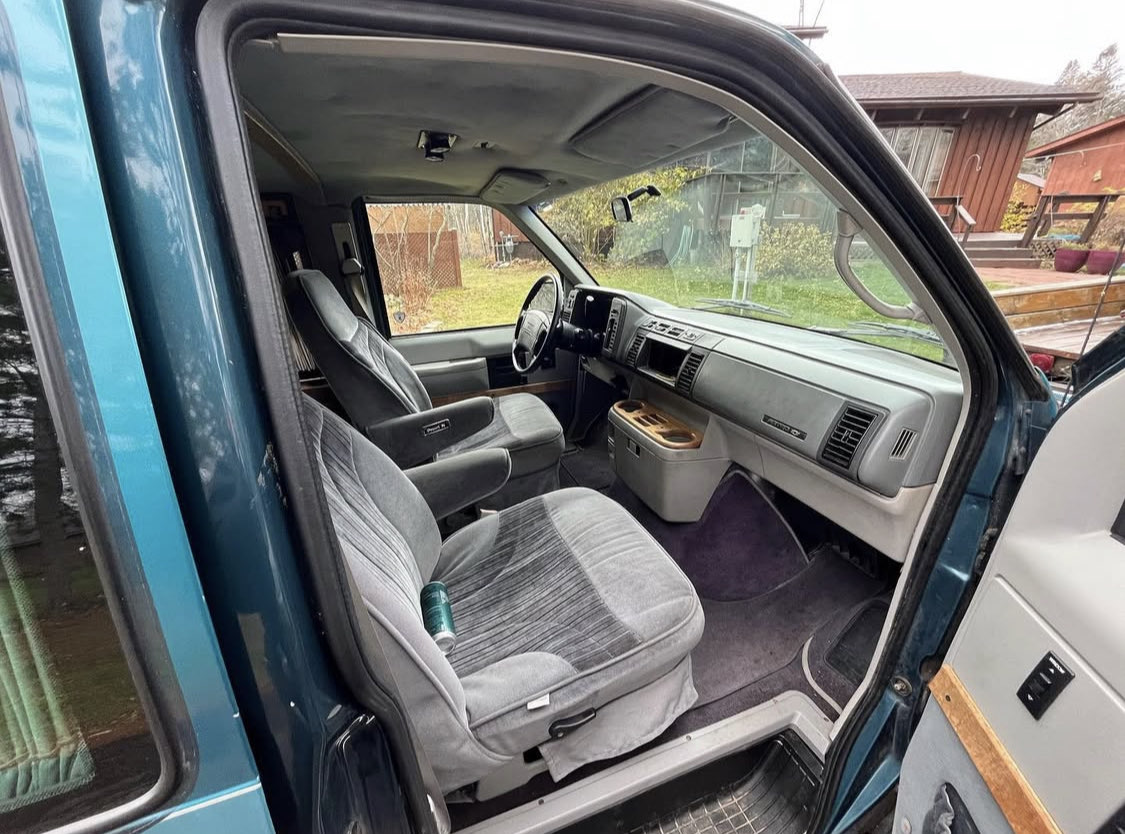
I knew from the get-go that I wanted it to be a camper. I also knew from the get-go that I was going to build it out for as little money as possible, seeing as I didn’t have any, which meant using mostly garbage I could scrounge up from around the farm. It didn’t take long to get started. It was northern Minnesota winter, hermit season, I had recently sprained my ankle so I was off work, and I had nothing better to do than hobble around the garage making a mess.
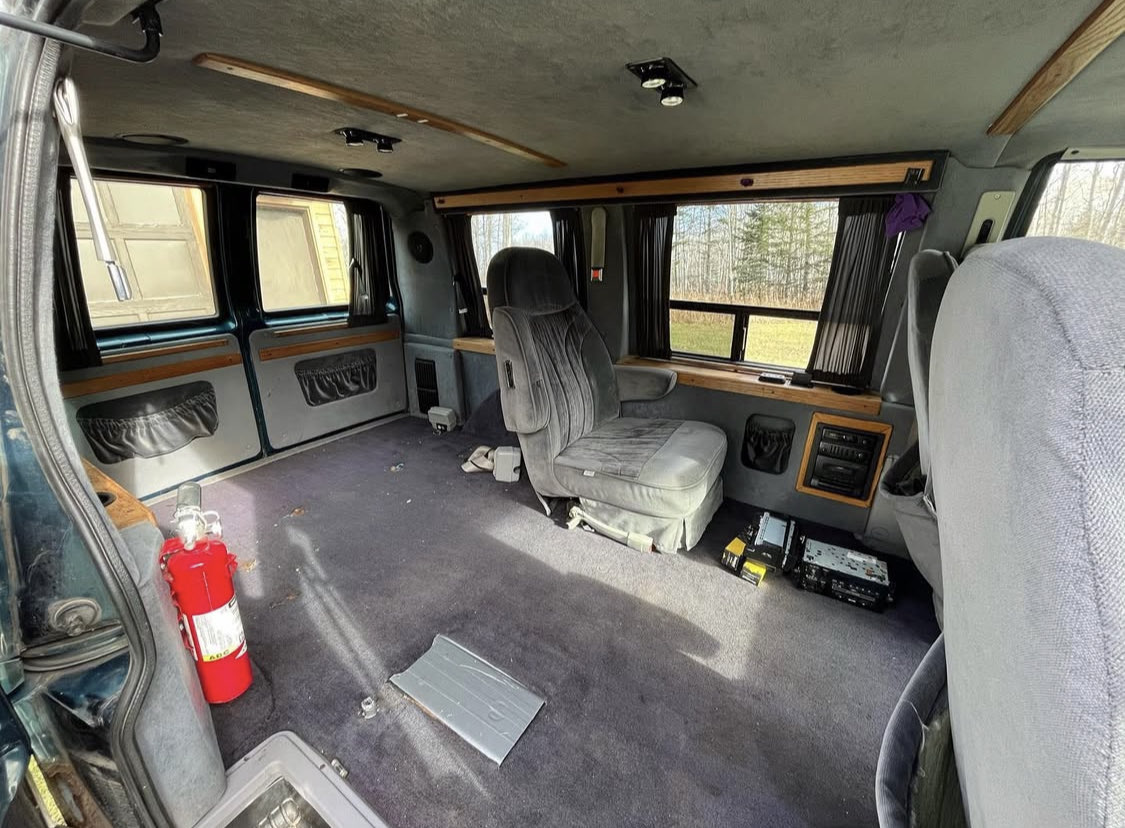
It’s important to outline my actual goals for the thing, and in order to do that we must define “camper”. I suffered no grand delusions of such luxuries as a toilet, or running water, or a stove, or hardwood flooring, or insulation beyond what the 90’s conversion package had to offer. This was going to be a camper in the purest sense, a vehicle that I could go camping in and take on road trips with a modicum of comfort. In essence, a metal tent with wheels. And bitchin’ stripes. What else does a guy need?
- The list was pretty short:
- Bunk
- Storage
- Battery
- Solar Panel
- Inverter
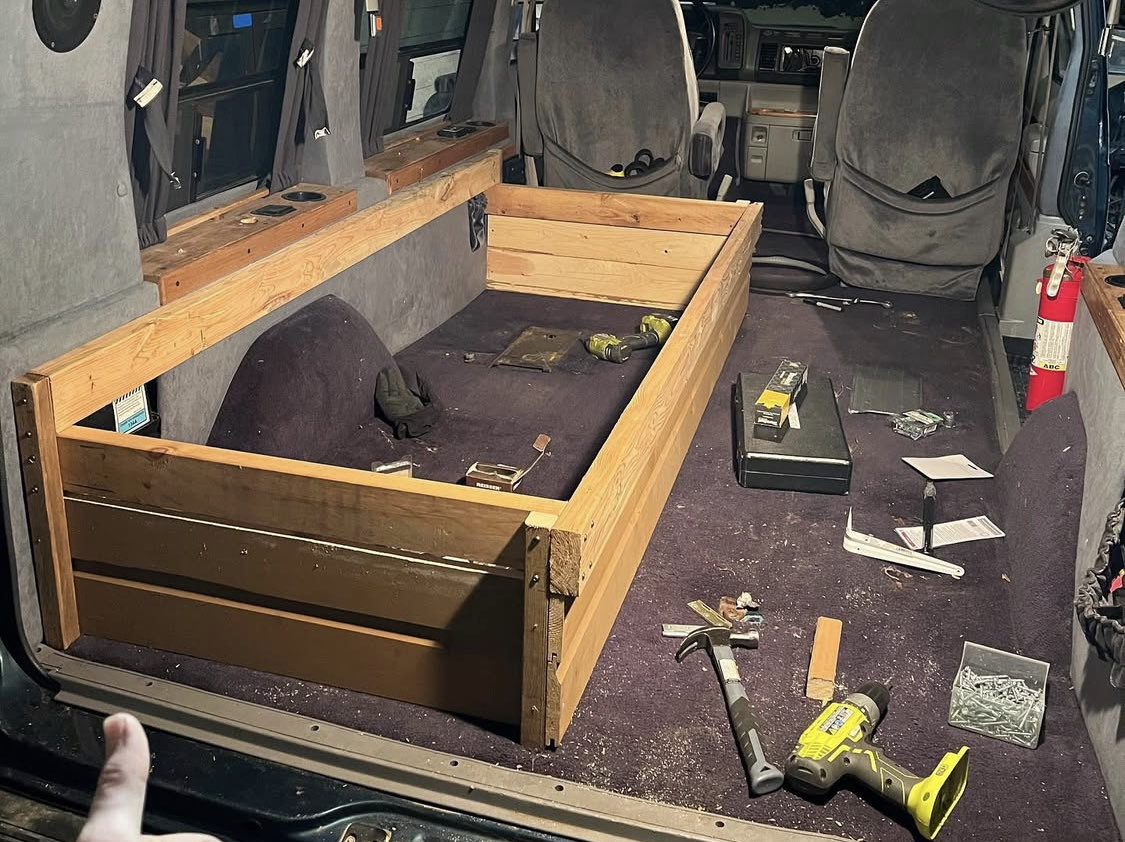
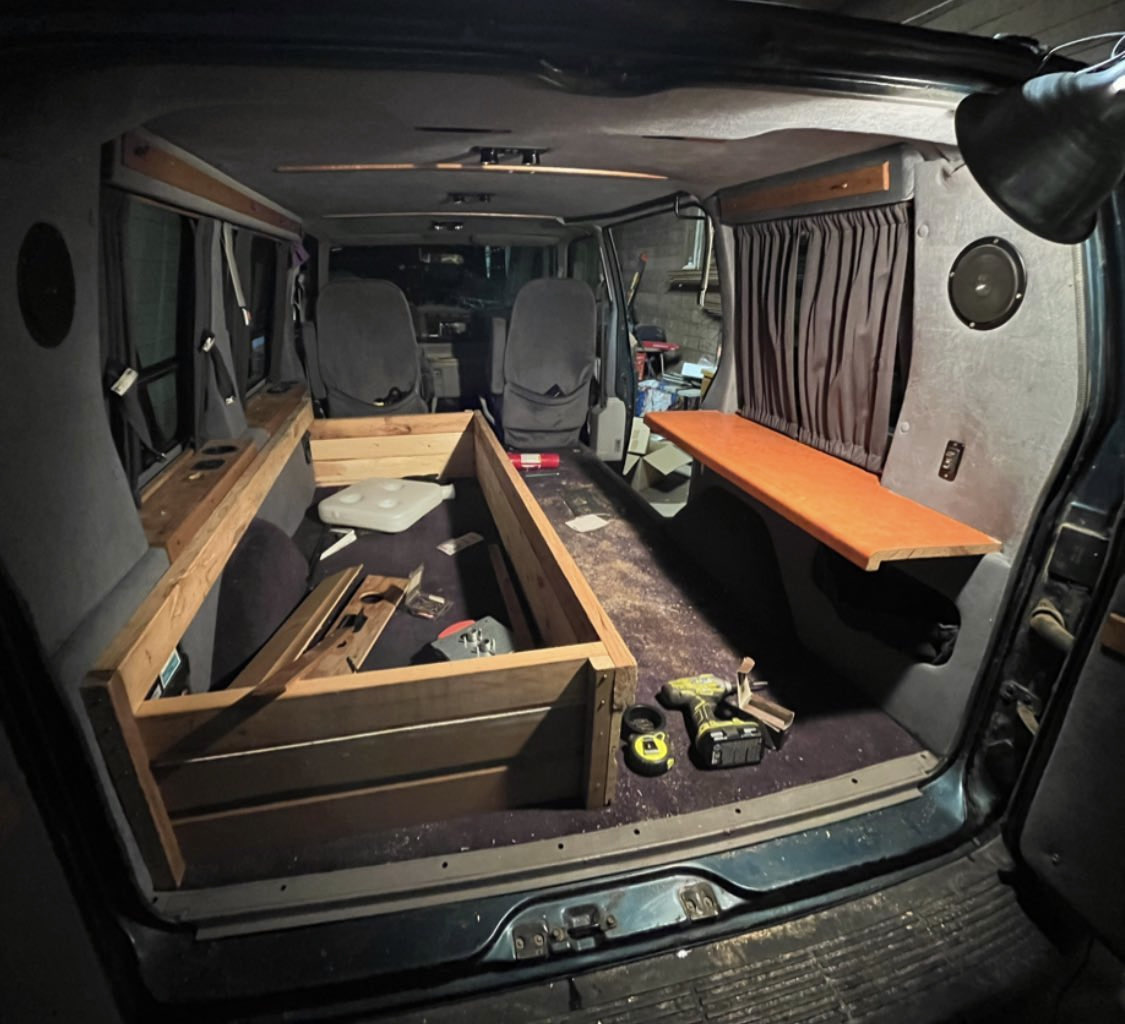
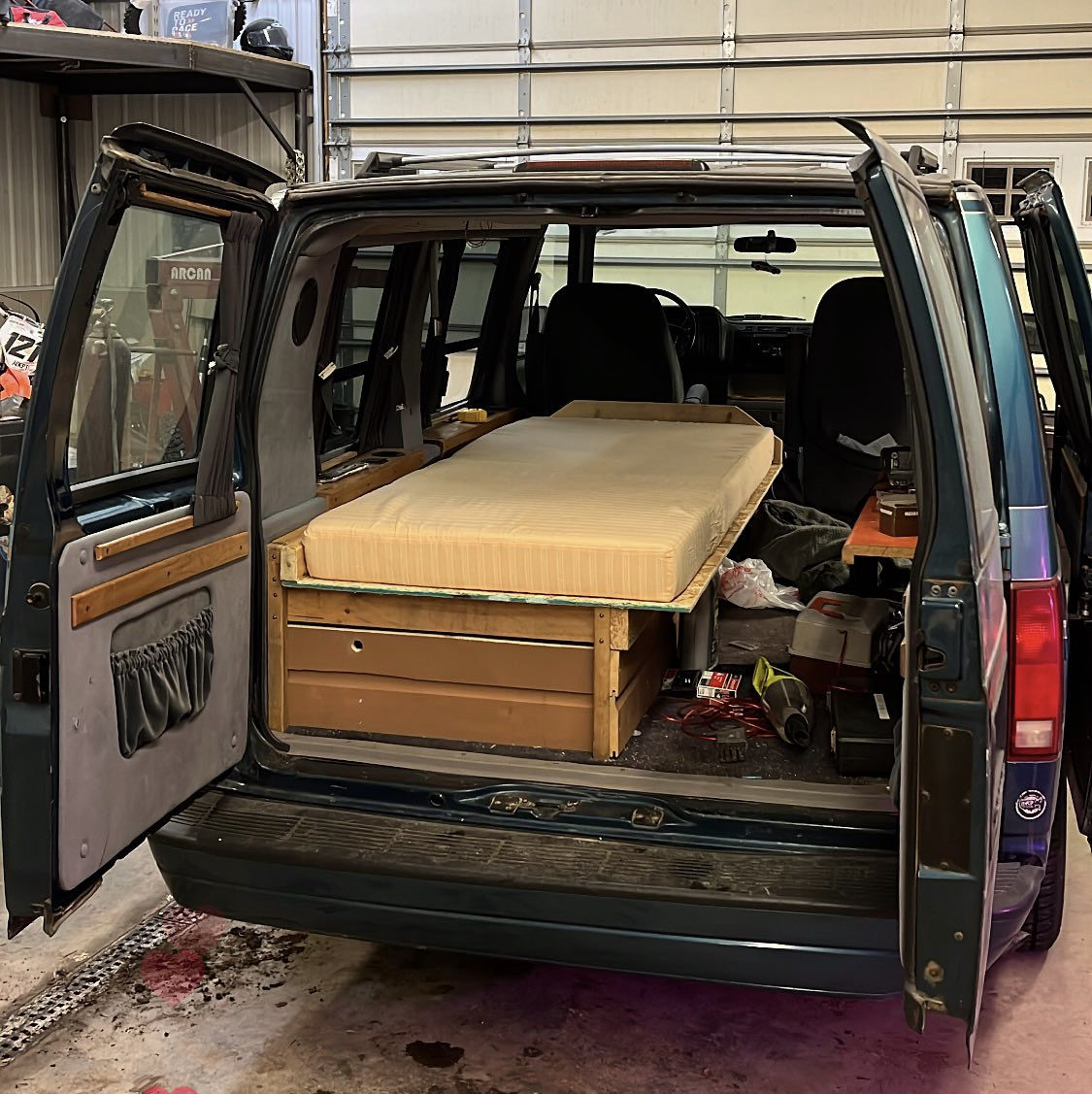
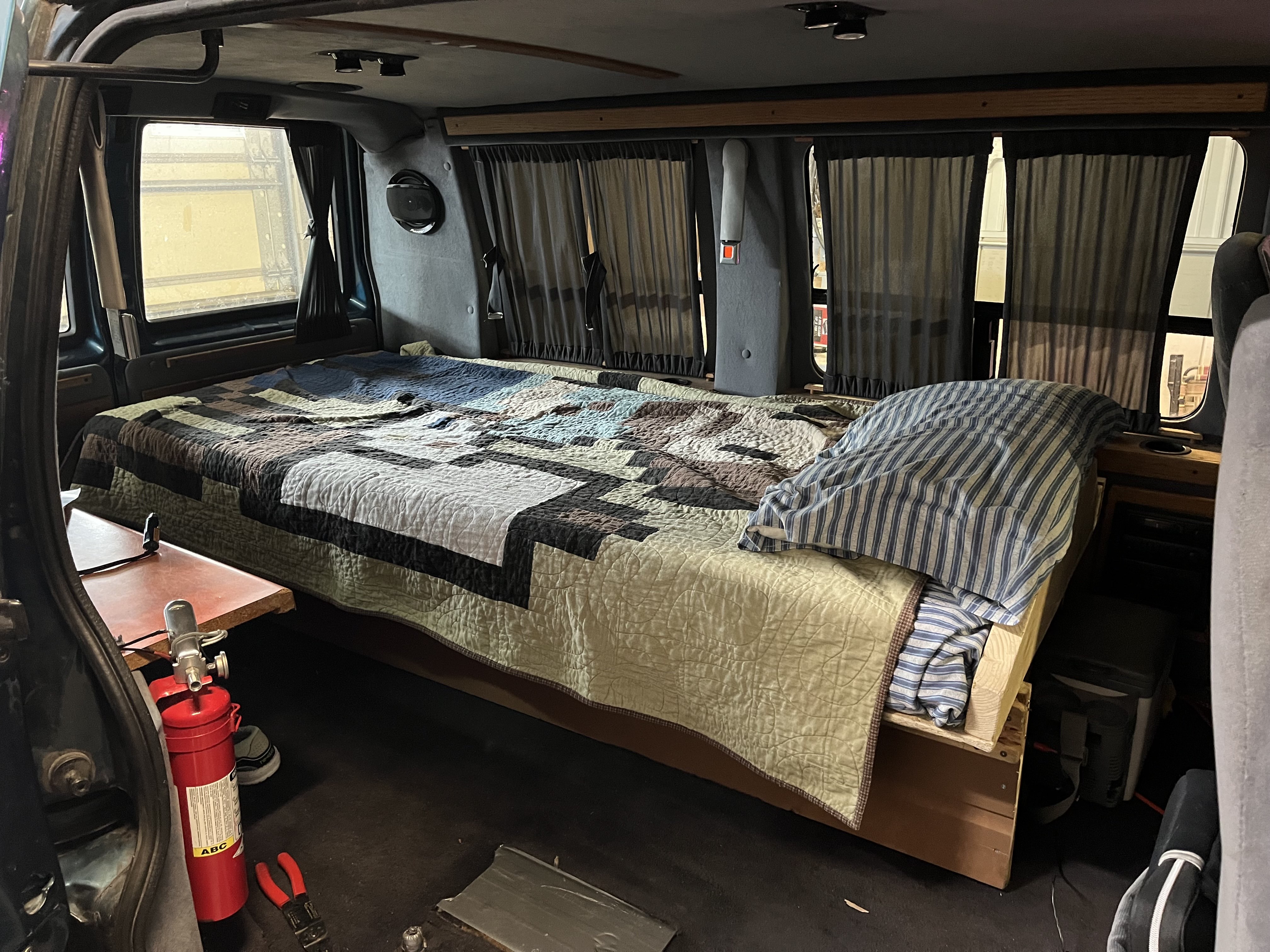
That was about it. I built the entire thing in a matter of about three weeks, including waiting for shipping and fixing the numerous mechanical issues that accompany the cheapest drivable Astro van on Facebook marketplace. First up was the bunk frame: Several pieces of the finest tongue-and-groove board, siding, and used 2x4s the barn floor had to offer. I sized it to a little more than half the width of the van, and 78” long so my six foot frame would have plenty of room to stretch. It also left plenty of space beneath for a battery and storage, accessible via the hinged top that was not yet built.
This was followed by the shelftable. This was made from a piece of orange laminated 1970’s lookin countertop, also salvaged from the floor of the barn. I cut it to fit under the rear side window, and braced it with a shelf bracket. Good enough for the girls I go out with. Somehow didn’t totally clash with the blue and gray color scheme of the van.
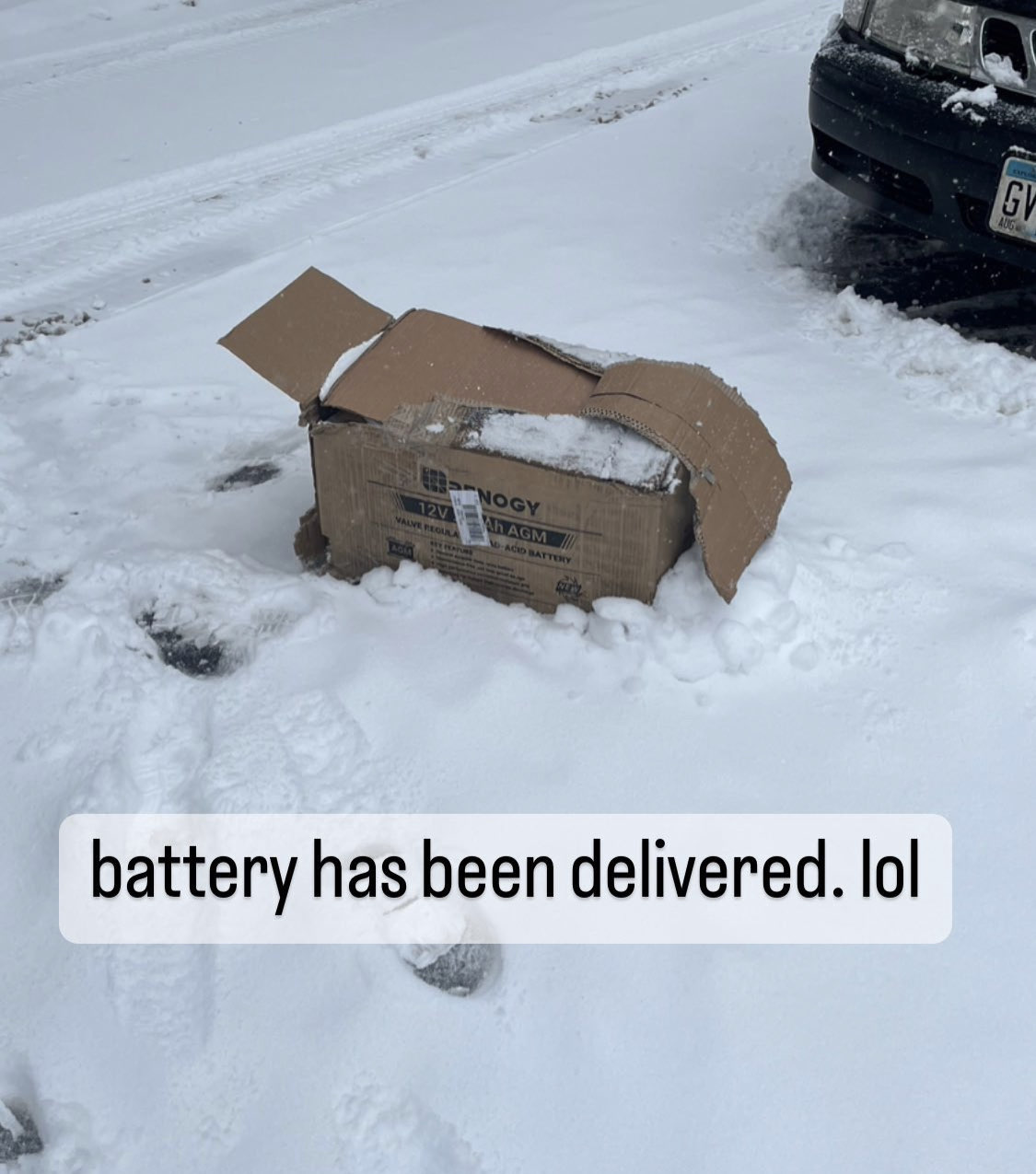
By this time, the battery showed up. It’s a 200ah AGM battery, refurbished, from eBay. $300 with free shipping, which absolutely does not make sense because it weighs 135lbs. The mail man left it in the middle of the driveway. I do not blame him.
This was foisted into place, retained with two pieces of wood, and wired in to the 120v wall charger. I then cut a hole in the firewall and ran a 6ga welding cable from the engine battery to a cutoff switch on the front of the bunk frame, reachable from the driver’s seat, to the battery. This was for charging off the engine. I had not yet gotten a solar panel or an inverter yet, so that was all for the electrical.
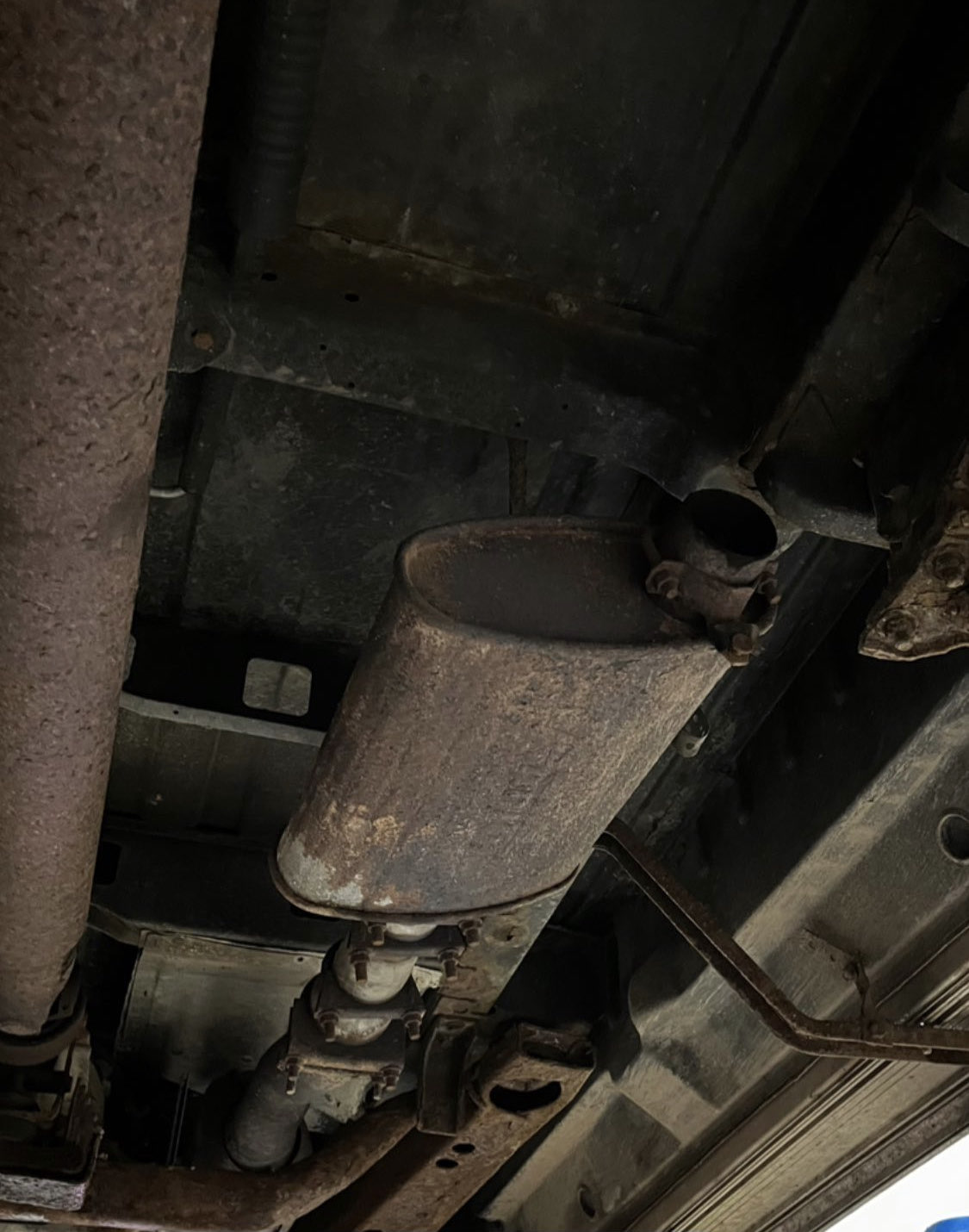
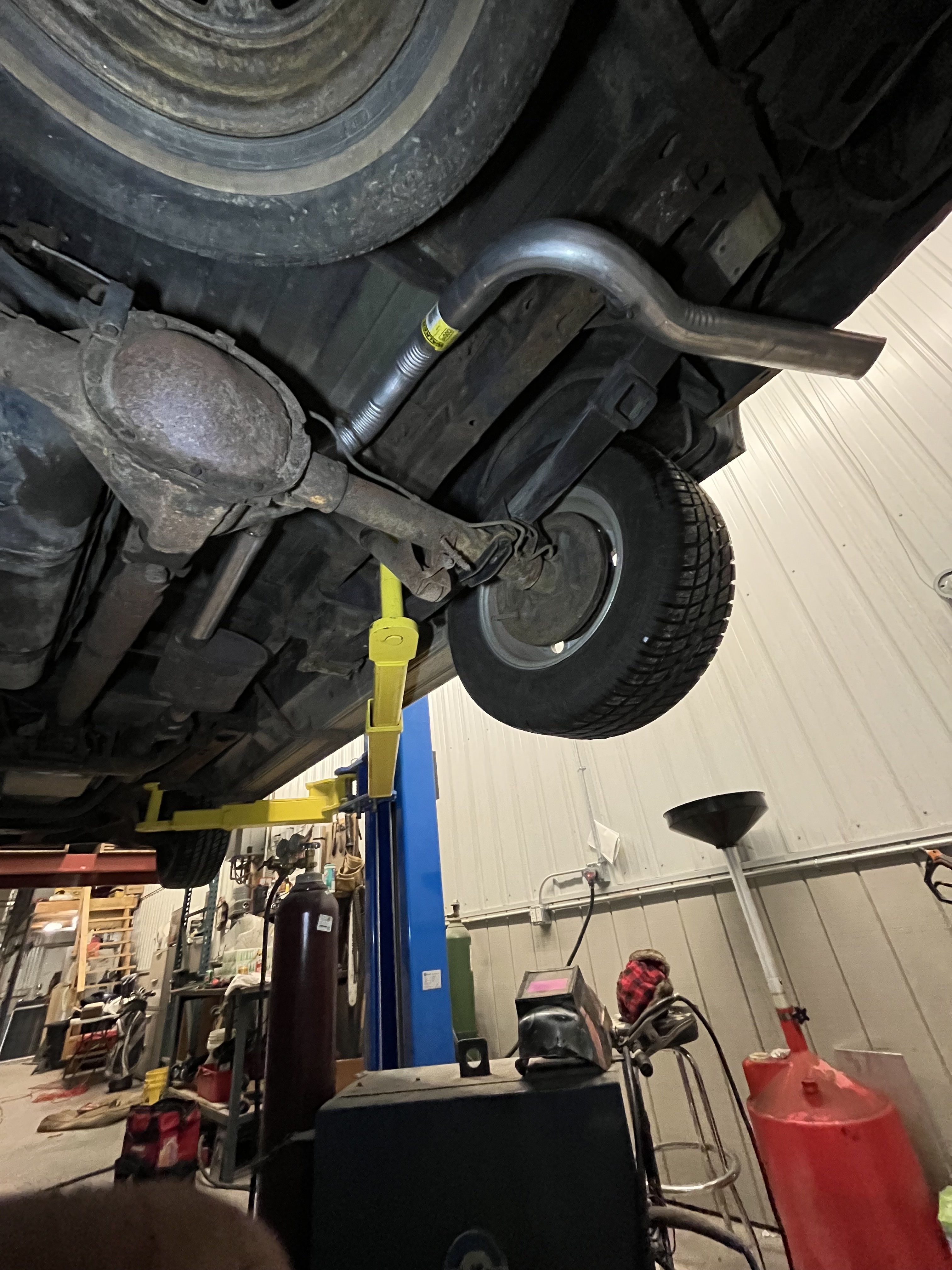
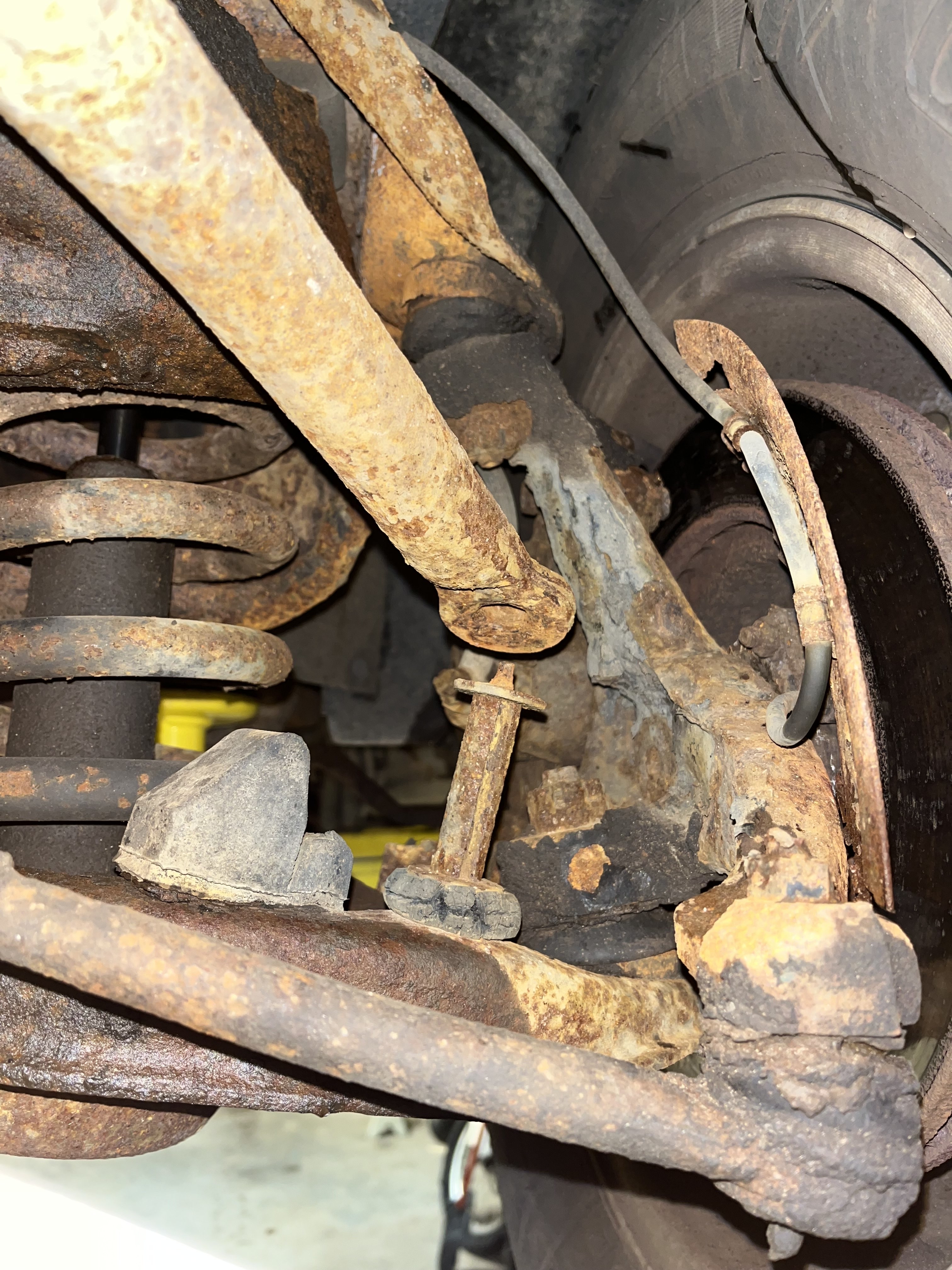
At this point I went to stay with my parents for a while, so I could take advantage of my dad’s lift. The van needed a lot of attention underneath. The exhaust was a muffler clamped to the rusted off end of the cat pipe, ending beneath the middle row floor. I fixed this with a bit of pipe and a pre-bent axle pipe. I am never going to make an axle pipe from scratch again, holy shit. Totally worth the $40.
I should mention that this van had the handling characteristics of a chest freezer with a whole cow and half a deer in it. It was kind of frightening to drive. I discovered that this was due to the driver’s side sway bar endlink being rusted completely in half. And all four shocks blown out. I swapped all of these broken parts, and the handling was instantly improved to that of a microwave, or maybe a large air fryer. Huuuuge difference. It was pretty damn comfortable, and no longer activated my fight-or-flight instincts in sharp bends.
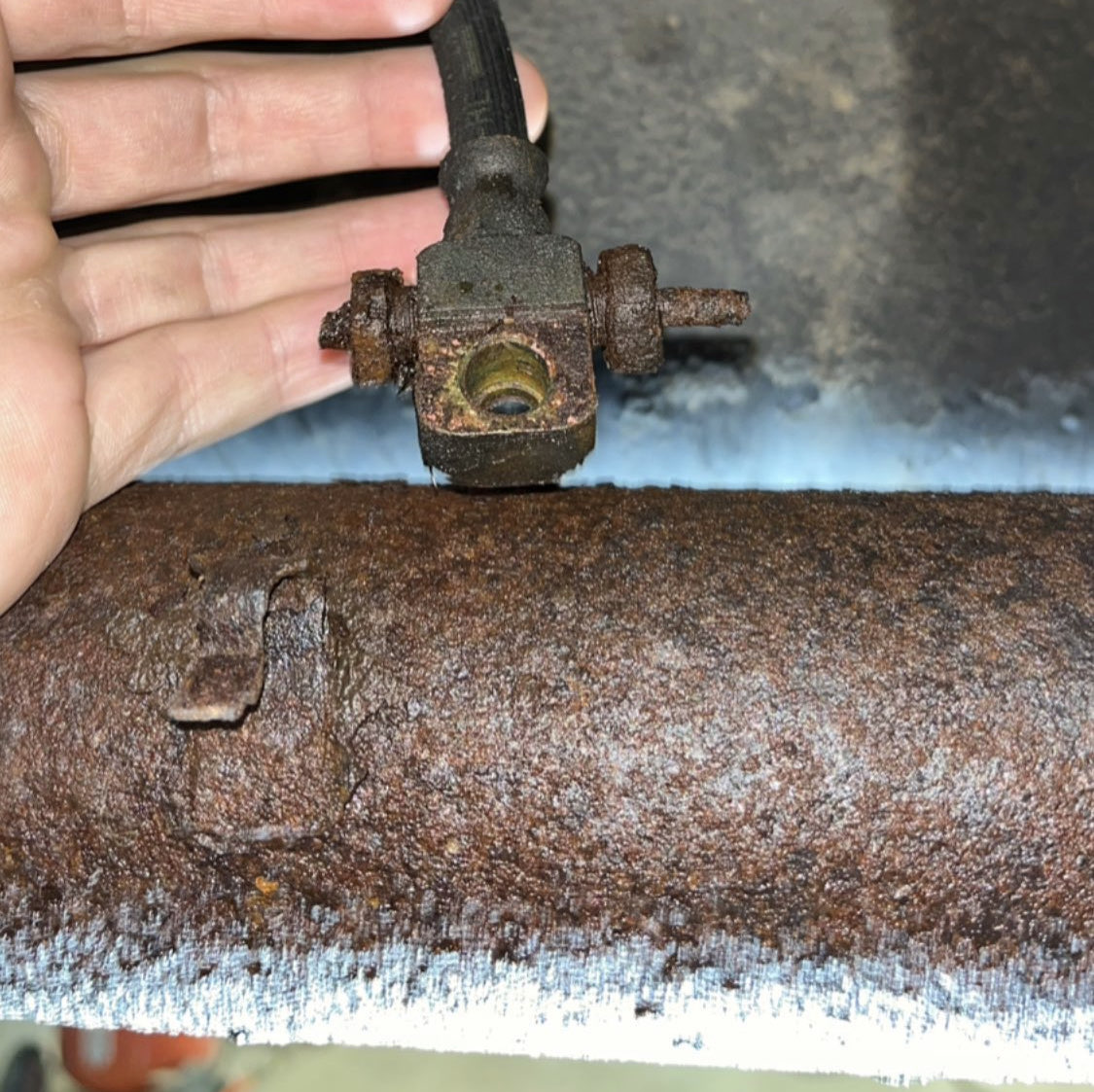
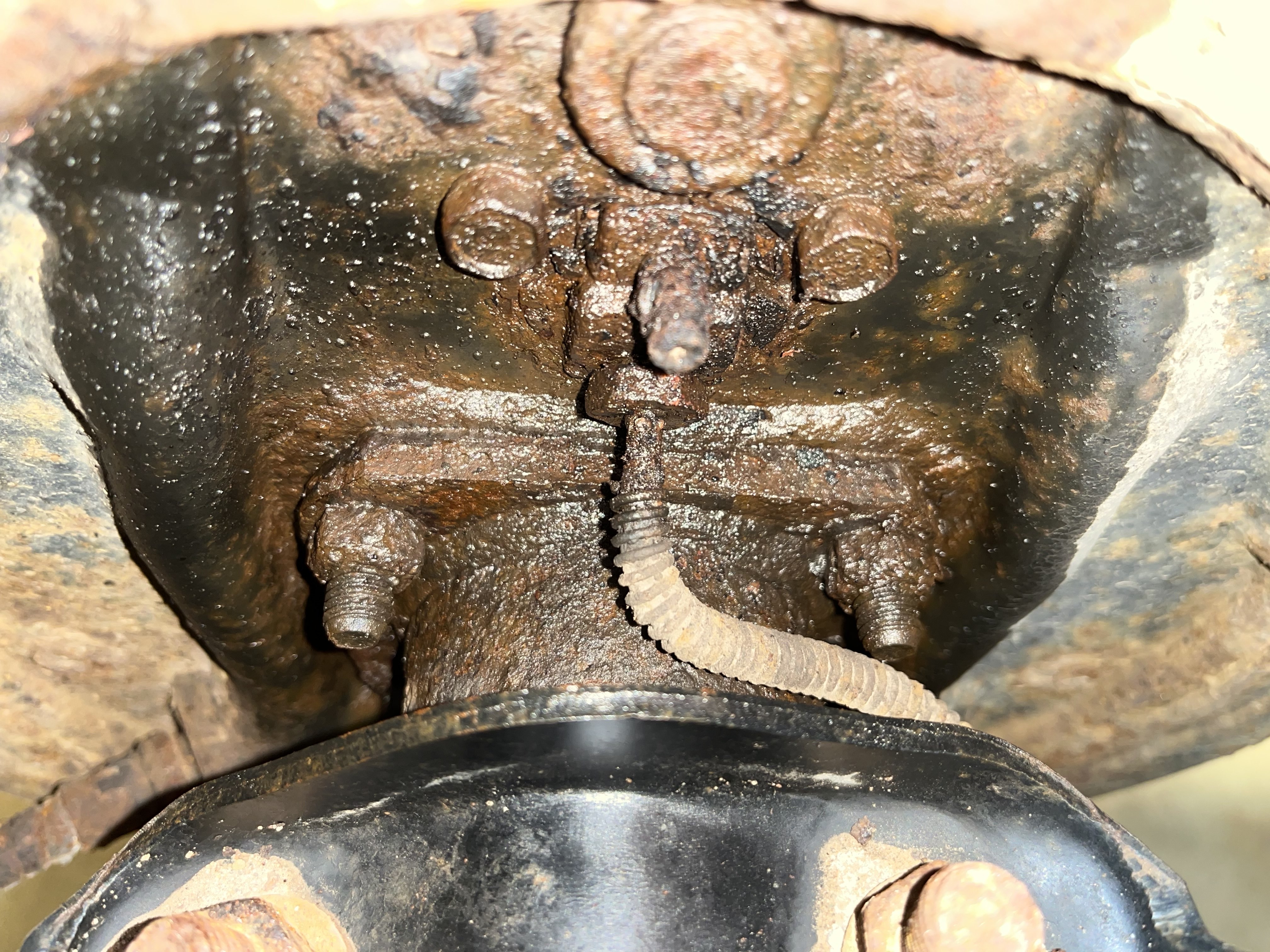
All of the brake lines in the rear were completely shot of course, standard Minnesota vehicle equipment. Replaced those with copper nickel. That would explain the front wheel lockup, but what about the hard pedal? Turns out old Astro vans have Hydroboost brake assist, like the ¾ and one ton pickups of the era. This is because the firewall of an Astro van is a miserable place, with no room for a full size vacuum booster. The Hydroboost unit runs off of hydraulic pressure from the power steering pump, and is much smaller as a result. Mine was shot, so I replaced that, and for probably the first time in a long time, the van had great brakes.
Next, I finished up the bunk, using a sheet of OSB, a 2x4, and a pair of mismatched cabinet door hinges. The mattress is from my mother’s Airstream. Many would hesitate to use a slab of fifty year old foam from a camper that was once home to multiple chainsmokers, but I’m going to let you in on a secret. Back in the 70s, foam was different. It was made from the same kind of secret sauce as CFC spraypaint and R12 refrigerant. Its thick, dense, and very comfortable, and somehow this one didn’t smell, like at all.
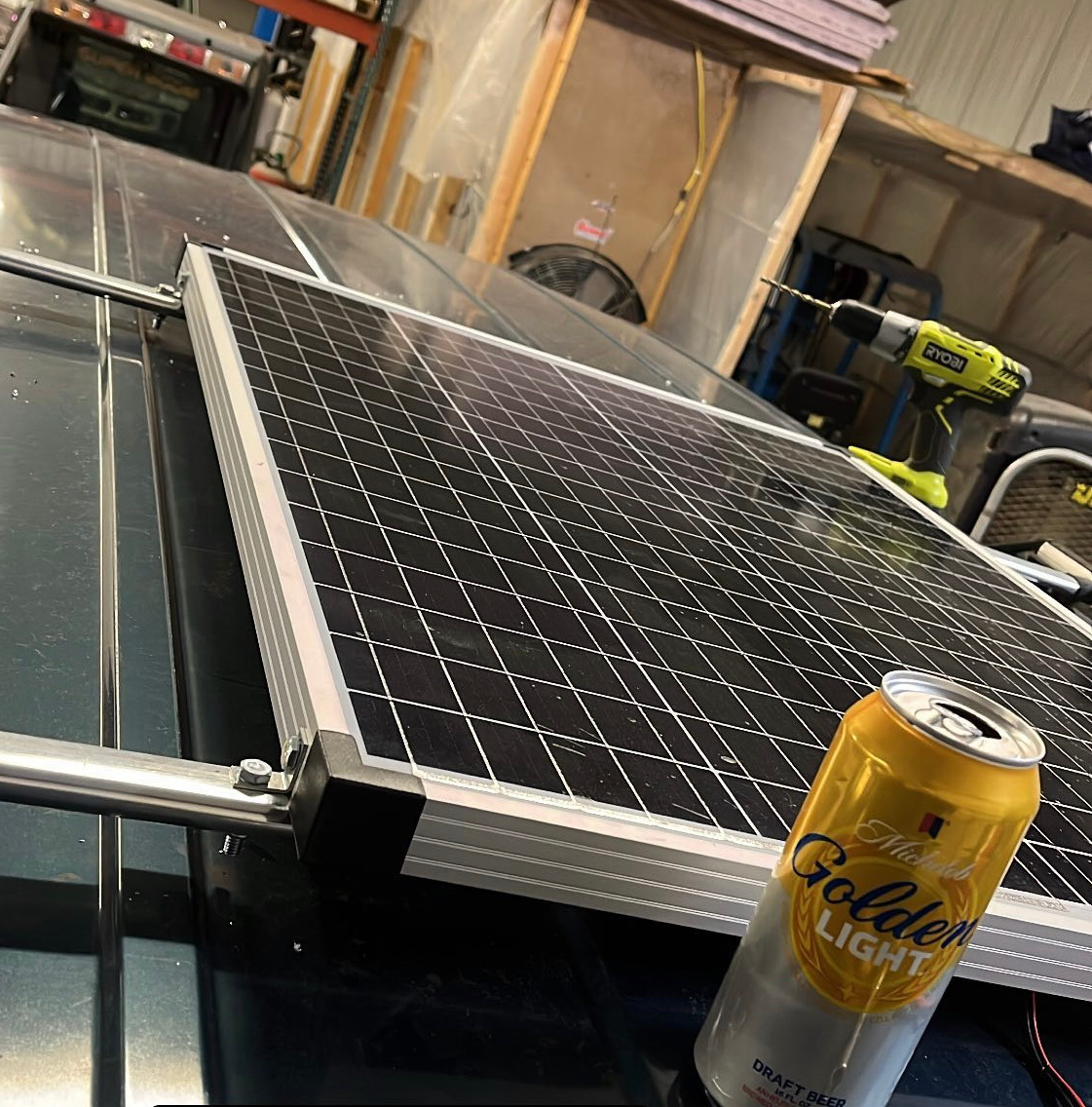
I also mounted a 100w solar panel from Harbor Freight up on the roof, and wired that in with a small charge controller, and stuck a 400w inverter next to it. I wasnt planning on running a fridge, or really anything big for power, I just wanted something to charge my phone and laptop. 400W has proven fine.
That about wrapped it up for phase one of The Van. It ran and drove well, was quiet and handled tight, and it was comfortable to sleep in. I was about to embark on my first big road trip, a 3 week jaunt to Florida. I had barely put 500 miles on the thing, as it had been broken or under construction most of the three months I’d owned it. All I had to do was place my faith in it, that it would not explode and strand me in the middle of nowhere. This turned out to be a good choice. Follow the link below to read about that trip, or scroll to continue the story of the Van. I was far, far from done working on the thing.